Saturday, February 8, 2014

Hotel Meg, Yerevan

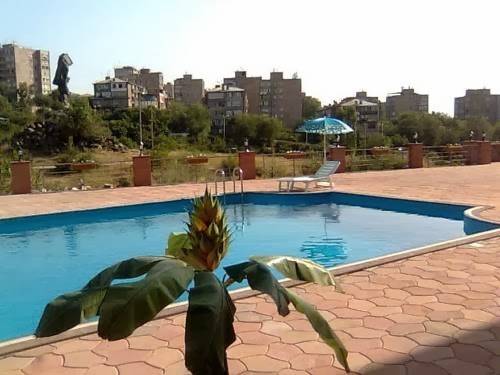
You may be surprised to learn that the top-rated hotel in Armenia’s capital is only rated as 3 stars!  In fact, everything about Hotel Meg might just surprise you...in a good way (not least, the quality for a 3 star hotel).  Located in the heart of the capital, if you choose to stay here then you will only be a few minutes’ walk from both The Matenadaran, The Cascade and The Opera House – excellently placed for you to explore all that the city has to offer.  If you want a perfectly cosy boutique hotel, then this is the one for you.  However, don’t let the fact that it only has 7 suites to offer put you off!  This is a spacious, stylish and comfortable hotel with modern facilities and proficient staff.
Hotel Meg, Yerevan
Arrival Information
Upon arrival, you are greeted with a 24-hour reception and staff who are pleased to help you day and night.  Check in is from 3.00pm and check out is by 12 noon. 

Services and Amenities
The hotel offers a wide-range of services and amenities, including: two-way airport transportation; concierge service, including restaurant and concert reservations fax and copying services, complimentary breakfast, an outdoor swimming pool, sightseeing tours, transportation, in-room massage, hair salon and spa booking service; and bottled water, laundry, dry cleaning, shoe cleaning service are all available for an additional cost.

Guest Rooms
There are three different room rates available: One-Room Suite, with one queen or two twin beds; Two-Room Suite, with one king or two twin beds; and Two-Room Suite, with one queen bed.  Room rates start at 32,702 AMD and finish at 67,448 AMD per night (as of February of 2014).  This definitely doesn’t make it the cheapest hotel in Armenia, but for your money you get an extremely large well-appointed, modern suite with a custom-designed super comfortable mattress – to guarantee you a good night’s sleep.  Also, these rates do vary with season and there are special rates available from 30,000 AMD, at certain times.  Each room features: in-room tea and coffee, complimentary seasonal fresh fruit, quality bed linen, kitchenettes with built-in refrigerators, air-conditioning, a safe, a hairdryer, an iron and ironing board, a television, satellite, a CD/DVD/MP3 player and WiFi Internet.

Trip Advisor Rating and Testimonials
Overall, this hotel has been awarded 4.5 stars out of 5 on the Trip Adviser website (written by independent visitors to the hotel).  When broken down, the hotel received: 5 stars for rooms, cleanliness and service;  4.5 stars for location, sleep quality and value.  Some of the guests said the following:

‘Warm and friendly...’
‘[Felt] at home, despite outside temperature of -17 degrees C!’
‘I loved the Hotel Meg!’
‘Ideal place to stay for a city break.’


If you are looking for small, intimate and friendly coupled with clean, spacious and well-appointed, then this is the place for you.

Wednesday, February 5, 2014

Armenian Grand Master - Levon Aronian

Levon Aronian
Levon Aronian is a world famous Chess Grandmaster from Armenia and is currently ranked number two in the FIDE World Chess rankings and is the third highest rated player in the history of the sport, holding an ELO rating of 2826.

Youth Champion
Born In Yeravan, Armenia, October 6th 1982, he learnt to play chess at the age of nine and was taught by his sister. However, he soon developed a talent for the game and his first coach was the renowned Grandmaster Melikset Khachiyan, who took Aronian to the 1994 World Youth Chess Championship where he dominated the Under 12 category, 8/9 and won the competition. The significance of this win cannot be overlooked as Aronian defeated future stars of the game including Ruslan Ponomariov, Francisco Vallejo Pons and Étienne Bacrot.

World Cup 
Aronian went on to claim many victories in his early career and significantly he was crowned the winner of the Chess World Cup in 2005, and was acknowledged by his peers as the finest sportsman in Armenia in the same year. By winning the premier international Chess competition at the tender age of only 23 he was rapidly elevated to the Chess elite shooting up the FIDE ranking to be fifth in the world.

International Success
However, his success was not limited to the individual game and he led the Armenian national squad to Gold Medals in the 2006 and 2008 Chess Olympiad. In honour of his achievements in Chess he was presented with the title of "Honoured Master of Sport of the Republic of Armenia" in late 2009, before leading the national team to success at the World Team Chess Championships in 2011. A third team victory quickly followed when Aronian led the Armenian national chess team to success at the 2102 Chess Olympiad, held in Istanbul.

National Hero
Levon Aronian’s successes, both as an individual and a team chess player, have elevated Armenian Chess to new heights, with international recognition. Armenian schools have made Chess a compulsory part of the curriculum to ensure a chess education for all pupils. Nevertheless, with more grandmasters per capita Armenia is considered to be one of the strongest chess nations in the world and is currently sixth in the world rankings.

The First Republic of Armenia

When the Armenian Kingdom of Cilica fell in 1375 the first Armenia state was established, however, when the Russian Empire started to crumble in the early part of the twentieth century the Republic of Armenia was formed. now referred to as the First Republic of Armenia. This new territory was established in Armenian populated areas from the Russian Empire which was disintegrating at the time. It is often referred to by Scholars as Russian Armenia, due to the significant influence the Russian Empire had on the fledgling republic.


The First Republic of Armenia
Fledgling Democracy
It was the Armenian Revolutionary Federation (ARF) that forced through the revolt that led to the republics creation and much of the new government was drawn from their ranks. However, this was not an easy time for the fledgling democracy as to the north they bordered the Democratic Republic of Georgia, to the west was the Ottoman Empire and with Persia due south, the country had many aggressive neighbours. 

Disputes and Difficulties
However, the early days for the country were fraught with problems. As well as keeping potentially aggressive neighbours at bay the country was plagued by internal disputes and difficulties. Many of the people who took up residence in the new country had escaped massacres in the former territory of Western Armenia committed by the advancing Ottoman Empire. This mass genocide by the Ottoman’s was part of wider operation to eliminate all Armenians living in the region.

Failed Alliance
After its difficult birth, the First Republic of Armenia reluctantly formed an alliance with neighbouring Georgians and Muslims to form the Tanscaucasian Federation in an attempt to show a unified front to the Soviet Red army.  However, disputes amongst the group were common and they never really achieved their goal of a unified front. Subsequently, the new Republic lasted for only two years and in the later months of 1920 the republic was seized and subjugated by the Soviet Red Army.

Armenian Soviet Socialist Republic
A year later the country had officially become the Armenian Soviet Socialist Republic and existed under the red banner of Soviet rule until 1991, when the Soviet Union disbanded. It was then, when independence was granted to Armenia, that the Third Republic of Armenia came in to existence and continues to thrive to this day.

Memorial
In remembrance of the First Republic of Armenia the
Sardarapat Memorial, located at the site of the Battle of Sardarabad, is visited annually in May by all departments of the government of Armenia to publically celebrate the first independent Armenia.

Monday, February 3, 2014

Armenian Winter Olympics Team - Sochi, Russia 2014

The 2014 Winter Olympics will be held in Sochi, Russia between the 7th to the 23rd of February, 2014. Armenia will send a small squad to Sochi to compete on behalf of their country, that consists of four athletes from two sports.


Winter Olympics - Sochi, Russia 2014
Competitors
Arman Serebrakian will compete in the Alpine Skiing event, whilst Sergey Mikayelyan, Artur Yeghoyan, and Katya Galstyan will compete in the cross country skiing. The male skiers qualified for their events whilst Katya Galstyan received a wildcard entry.

Alpine Skiing
The Alpine Skiing event at the 2014 Winter Olympics are scheduled to be held at the famous Rosa Khutor Alpine Resort which is located near Krasnaya Polyana, Russia. A total of ten events will be run between 9th and 22nd of February, 2014. The events in this category include the Combined, Downhill, Giant slalom, Slalom and the Super-G.

The men’s Down Hill will commence the Alpine Skiing event on the 9th of February. Arman Serebrakian will have his work cut out for him to be amongst the medals, as this year’s roster of the very best skiers from around the world is one the most competitive in the history of Alpine skiing at the Winter Olympics.

At this year’s Alpine Skiing event, 332 athletes from 74 nations will compete and Malta, Timor-Leste, Togo and Zimbabwe are competing in the Alpine event for the first time.

Cross Country Skiing
The Cross Country Skiing event will be held at the Laura Biathlon and Ski Complex which is located near Krasnaya Polyana, Russia. A total of ten evens will be run from 8th and 23rd of February, 2014. The events in the Distance category include the Classical, Skiathlon, Mass Start and the Relay whilst in the Sprint category there are the Individual and Team events.

The Woman’s Skiathlon will commence on the Cross Country Skiing event on the 8th of February, 2014. Sergey Mikayelyan, Artur Yeghoyan, and Katya Galstyan are considered to be potential medal winners in this year’s competitive field.

This year, 310 athletes from 54 nations will compete at this year’s Cross Country Skiing event, with Chile making their Olympic debut in the event.

Sunday, February 2, 2014

Aram Khachaturian – Armenian Composer (1903 – 1978)

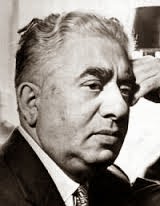
Aram Khachaturian
Aram Khachaturian is a world famous Armenian composer who lived between 1903 and 1978. He was not alive to see an independent Armenia (which was granted independence in 1991) and so he is often referred to as a Soviet-Armenian composer. Certainly, he is considered one the titans of Soviet music and is also considered to be one of the most influential musicians of the twentieth century.


Origins
Born in Tiflis of the former Soviet Empire, which is now known as Tbilisi, Georgia, Aram Khachaturian was born in to a poor Armenian family. His father moved from Armenia to Tiflis at the age of 13 and by the time he was 25 he owned his own bookbinding shop. Aram was the youngest of five siblings and became fascinated with the music he found in the region; however, despite this love of music he did not study or learn to read music at this time.

Musical Education
It was not until Armenia was declared a Soviet Republic in 1920 that Khachaturian began his musical education when joined a propaganda train which toured Armenia. The train was populated by Georgian – Armenians who entertained the crowds with moral boosting musical accompaniment to political speakers.

However, it was not until the following year when Khachaturian joined his brother, who had risen to be the stage director at the Second Moscow Art Theatre, that he showed an interest in musical education. Despite not having any formal musical education, Khachaturian showed such a great ability for music he was admitted the prestigious Gnessin Institute.

First Symphony
Khachaturian transferred to the Moscow Conservatory in 1929 and he graduated with his First Symphony in 1934. The year prior to his graduation he married the composer and class mate Nina Makarova. A few years later in 1951 Khachaturian was appointed professor at the Gnessin State Musical and the Moscow Consevatory. He was a member of the Communist Party of the Soviet Union; however, he fell out of favour with the party when his third Symphony earned him the wrath of party leaders, despite (according to the composer himself) the work being a tribute to his beloved communism.

Death
On May 1, 1978 Khachaturian died just before his 75th birthday and he is buried in Yerevan. In fact, the site he is buried in is also the final resting place for a number of prominent Armenians who have raised the profile Armenian art to international levels.

Friday, January 31, 2014

Khor Virap Monastery

If you choose to visit The Monastery of Geghard whilst you are in Armenia, it may well be that Khor Virap Monastery, located 2.5 miles from Lusarvat Village in the Ararat Valley (or 19 miles north of Yerevan), will also be of interest to you.  Situated on a hill close to the snow-capped peaks of Mount Ararat (the national symbol of Armenia) and surrounded by archaeological sites (started in 1970 but still being excavated in the present day), this historical edifice affords visitors magnificent views of both the mountain and the green belt along the Arax (or Arakas) River, which represents the boundary with Turkey (where there are a series of military lookout posts).

Khor Virap Monastery
History
Khor Virap is one of the top tourist destinations in Armenia because of the part it played in shaping the history of Armenia.  Khor Virap literally translates as ‘deep dungeon’ and it was named such because a deep dungeon, located in Artashat, was where the pagan King Tiridates III imprisoned his assistant, Grigor Lusavorich (Saint Gregory the Illuminator). 
Prior to his imprisonment, Grigor was relentlessly tortured because of his commitment to the Christian religion and his refusal to offer sacrifice to the pagan goddess Anahita.  However, after the King was given notice that his father had been murdered by Grigor’s father, he ordered that Grigor should, instead, have his hands and legs bound, be thrown in to the deep, dark pit and left to die.  Over the next 13 years, Grigor was forgotten by the King and presumed dead (and probably would have died if it hadn’t been for a Christian widow that dropped him food in to the pit, every day). 

During Grigor’s imprisonment, the King continued to pursue wars, persecute Christians and commit unspeakable atrocities (including the murder of Rhipsime) and was eventually sent mad as penance for his actions.  As the King went mad, both his household and the people of the city were said to fall under the possession of demons.  However, King Tiridates’ sister dreamt of an angel who told her that Grigor could end the torments of the King and his people.  It was thought that Grigor had died within days of being cast in to the pit, but when Prince Awtay went to look, he found that the King’s former assistant was, indeed, alive.  Brought out of the pit in a terrible state, Grigor was taken to the King, miraculously curing him of his ailment, despite knowing the atrocities that the King had committed. 

In thankfulness for what Grigor had done, the King and his court approached him for forgiveness for the sins they had perpetrated and adopted Christianity as their new faith.  Grigor was afforded the title of Bishop of Caesarea and began preaching Christianity to the King, his court and his army and, in 301 AD, Christianity was declared as the state religion of Armenia.

Structure
Erected by the builder Nerses III in the 5th century, the original chapel that was built around the pit where Saint Gregory the Illuminator spent his 13 years of captivity was constructed of white limestone.  The monastery, which stands today, was built later around the enclosure that surrounded the ruins of Nerses’ Chapel and the final addition of the large, but plain, church dedicated to Saint Astvatsatsin was made in the 17th century and is, apparently, a typical Armenian build of that time.  It to the southwest of this church, in the St. Gevorg chapel, that Saint Gregory’s pit can be located.  Be warned: there are actually two holes which are accessible to the public in this building, but care must be taken as there are no markings to indicate their presence to you! 

However, although you may like to explore both holes, you will find the one that leads to the pit that held Saint Gregory in the main room, to the right of the altar.  A long ladder leads you down in to the pit, which descends 20 feet (or 6 metres) below ground.  Once there, you may find yourself surprised at the fact that this underground prison cell is 14 feet across.  Although, if you imagine it without any light whatsoever and with a lack of circulation, then it must have been a miserable place to have spent 13 years of your life.

What to Expect
This is still an active place of worship and, as such, you will still see weddings being held here.  Again, please be respectful of these ceremonies.
However, Khor Virap is a huge tourist destination, so also expect vibrancy...with performances, souvenir kiosks, snack stands and...best of all...doves being sold for release, in the hope that they will fly to Mount Ararat.

Tourist Advice
If you are planning to visit in the Armenian summer, temperatures can become very high; therefore, it may be best to consider visiting in the morning.
If you are planning to climb down to St. Gregory’s cell when visiting Khor Virap, ensure you wear sturdy shoes in preparation for the climb down the ladder.  Also, if you are planning to do this in the heat of the Armenian summer, the lack of circulation means the cell is exceptionally humid; therefore, be advised that taking a flashlight/torch with you may be preferable to taking candles (as these only add to the humidity).
Due to the fact that you are visiting what is considered to still be an active place of worship, be respectful of this and ensure that you are appropriately dressed (long sleeves and covered to your knees).

Trip Adviser Ratings and Testimonials
Khor Virap is ranked as the Number 3 Armenian tourist attraction on Trip Adviser, with 107 out of 150 independent reviewers giving it 5 out of 5 and 37 more giving it 4 stars out of 5.  Some of the guests said the following:

                ‘Unique place...’
                ‘Mesmerising is an understatement!’
                ‘Excellent view...’
                ‘Wow!’


With its fantastic historical provenance and because of the unique experience it has to offer, this is a place that must be visited while in Armenia.